
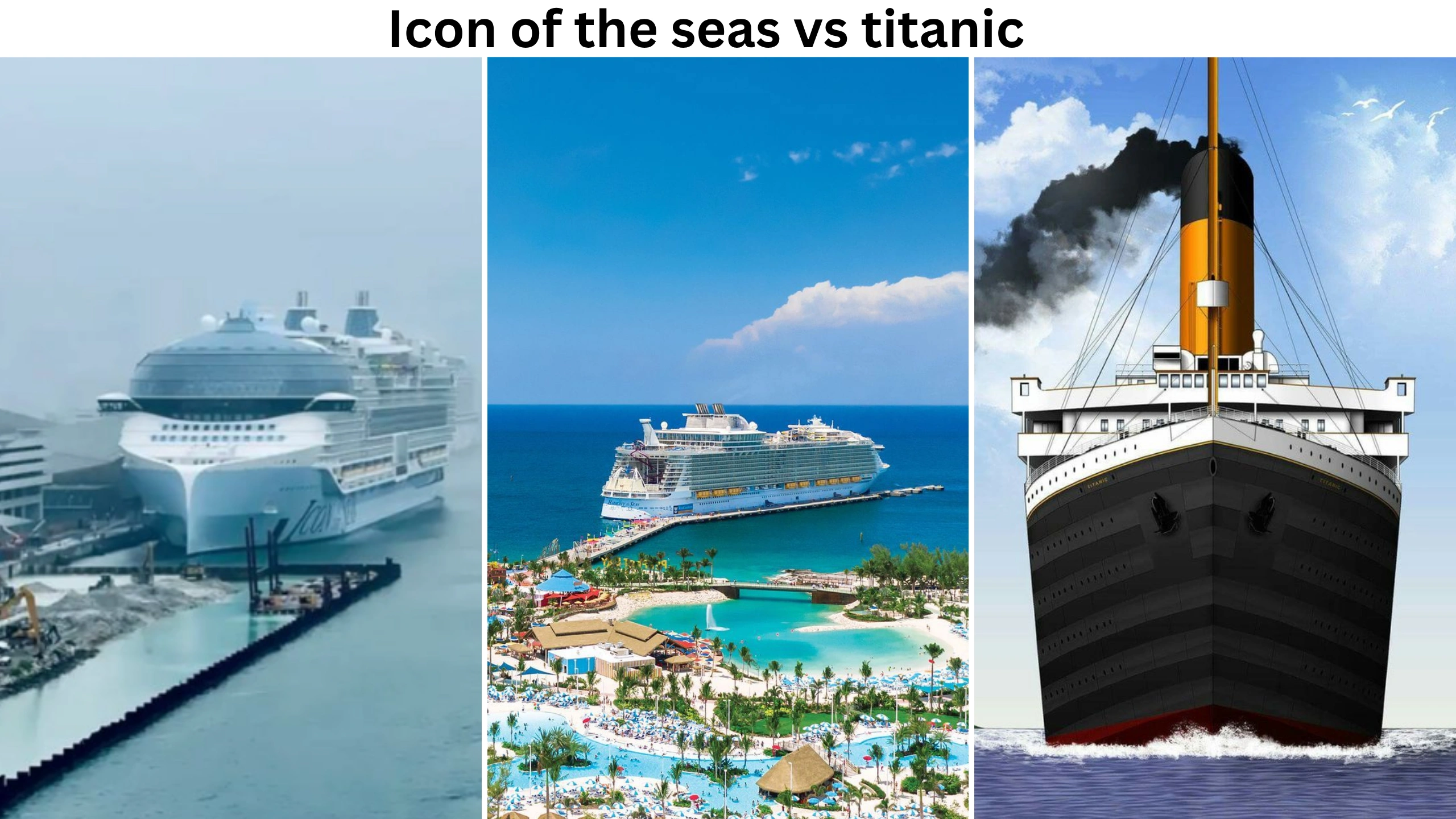
Icon of the Seas vs Titanic highlights the incredible advancements in shipbuilding over more than a century. From size and speed to safety and facilities, the two vessels showcase the evolution of maritime engineering.
“While Titanic once symbolized grandeur and ambition, Icon of the Seas represents the pinnacle of modern cruise design, offering unmatched luxury, safety, and innovation.”
As we compare their size, speed, accommodations, cost, and features, it’s clear how far technology and design have transformed the cruising experience, shaping the future of maritime travel.
Icon of the Seas vs Titanic: Size Comparison
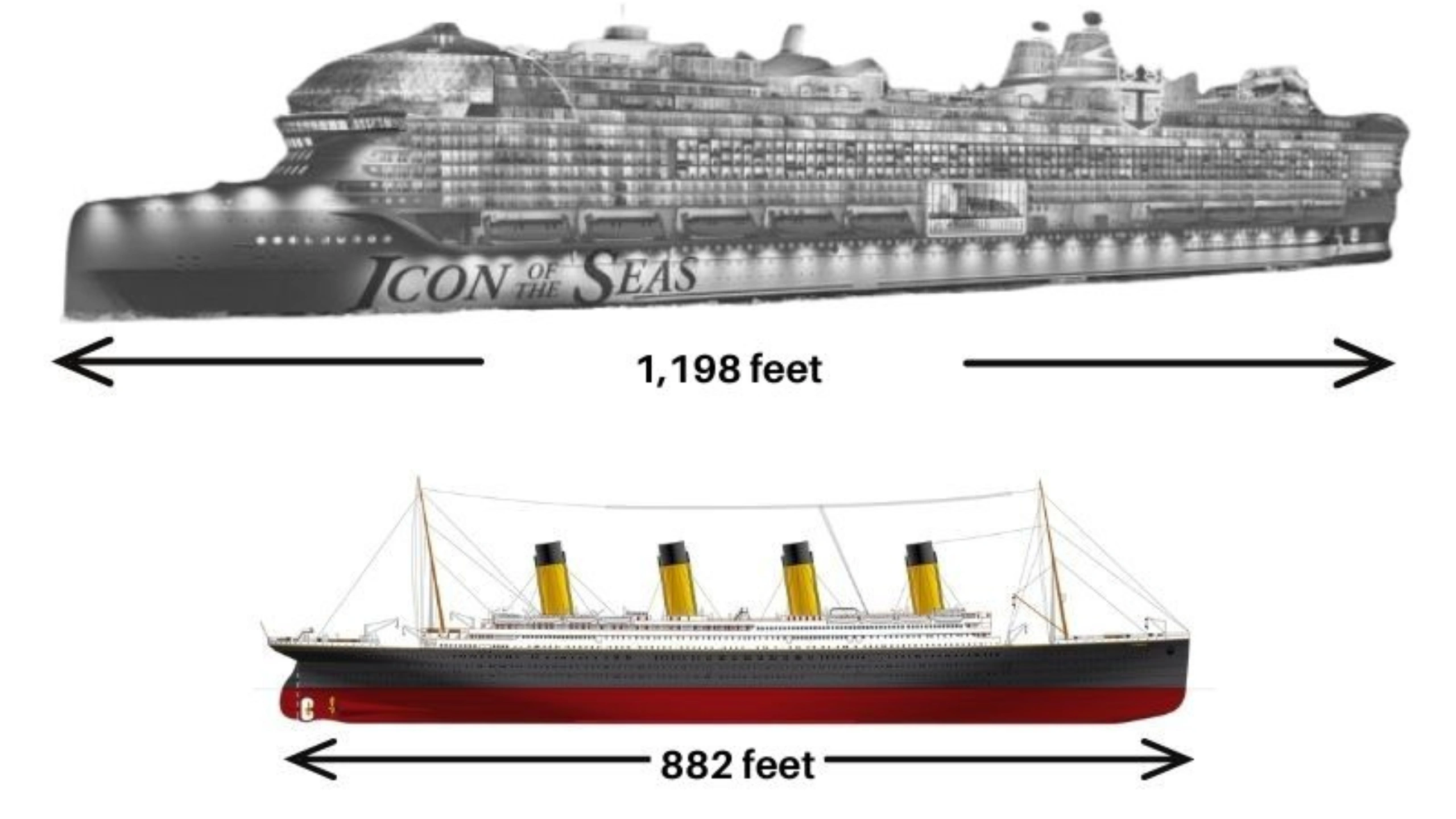
The Icon of the Seas boasts a massive size of 240,800 GT and a length of 1,181 feet, showcasing the latest in maritime technology and engineering. It can carry 9,950 people, including 7,600 guests and 2,350 crew members. The ship’s infrastructure is designed to support thousands of passengers and crew, representing a significant leap in the scale and organization of modern cruise ships.
In contrast, the Titanic, with a size of 46,328 GT and a length of 882 feet, was considered an engineering marvel of its time. It could carry 2,435 guests and 892 crew members. While impressive for its era, the Titanic’s size and capacity are far surpassed by the Icon of the Seas, highlighting how far maritime technology has advanced over the years.
Icon of the Seas and Titanic Speed Comparison
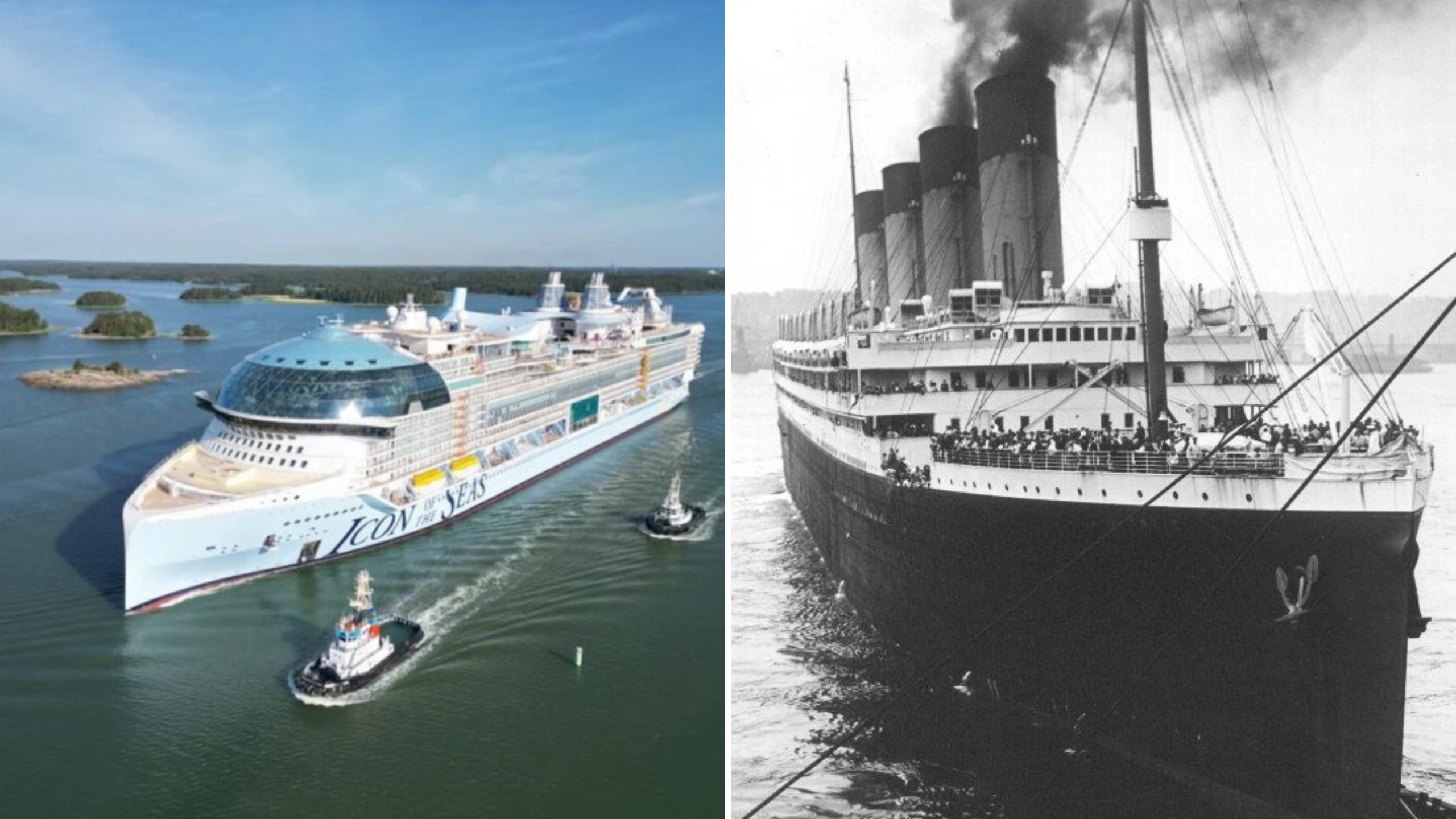
The Icon of the Seas cruises at speeds of 21, 22, and 23 knots, making it a powerful and efficient vessel. Unlike the Titanic, which operated during the early 20th century, the Icon benefits from modern advancements in shipbuilding technology. These innovations ensure better fuel efficiency, smoother sailing, and advanced onboard amenities that enhance the overall cruising experience. The Icon of the Seas represents the latest in cruise ship design, with state-of-the-art features and environmental considerations, all while maintaining impressive speed and performance on the open seas.
The Titanic had a cruising speed of 21, 22, and even 23 knots, showcasing power and grace on the open seas. While it was one of the fastest and most luxurious ships of its time, it lacked the modern technology and amenities that today’s vessels offer. Despite its impressive speed, it did not have the advanced navigation and safety features of today’s ships, which ensures more efficient and safer journeys.
Icon of the Seas and Titanic Facilities Comparison
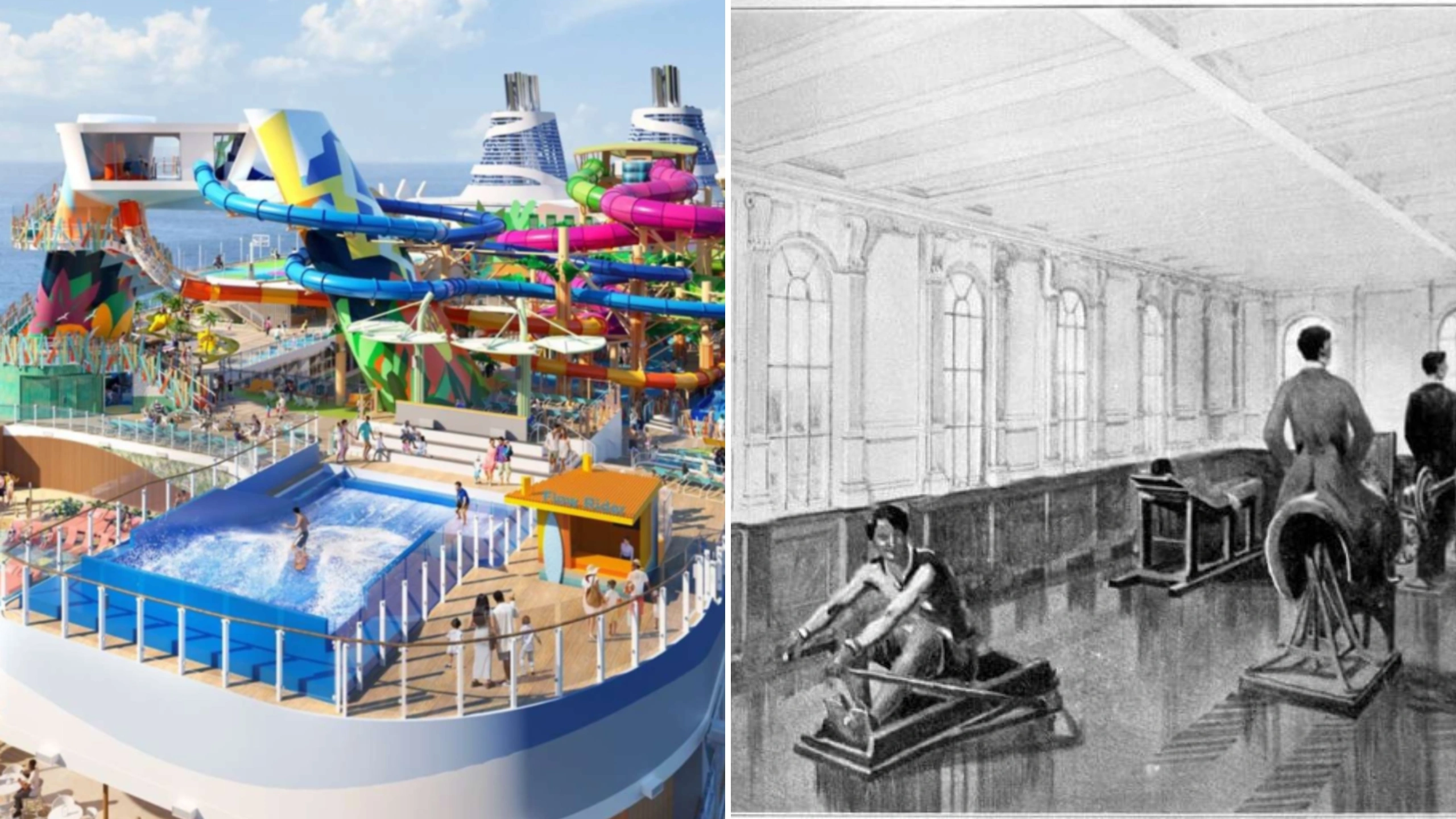
The Icon of the Seas redefines modern cruise design with its diverse accommodations, luxurious cabins, and top-tier facilities. Unlike the Titanic, this modern vessel offers multiple themed swimming pools, stylish entertainment venues, and spacious areas for leisure and exercise. The various pools on the Icon are designed around passenger preferences, enhancing relaxation and comfort during the journey.
The Titanic featured a single pool, providing far fewer options for guests seeking relaxation. While it was a marvel of its time, the Titanic lacked the variety of modern amenities and flexibility in design that today’s cruise ships, like the Icon of the Seas, offer to cater to a wide range of passenger preferences and lifestyles.
Icon of the Seas and Titanic Activities Comparison
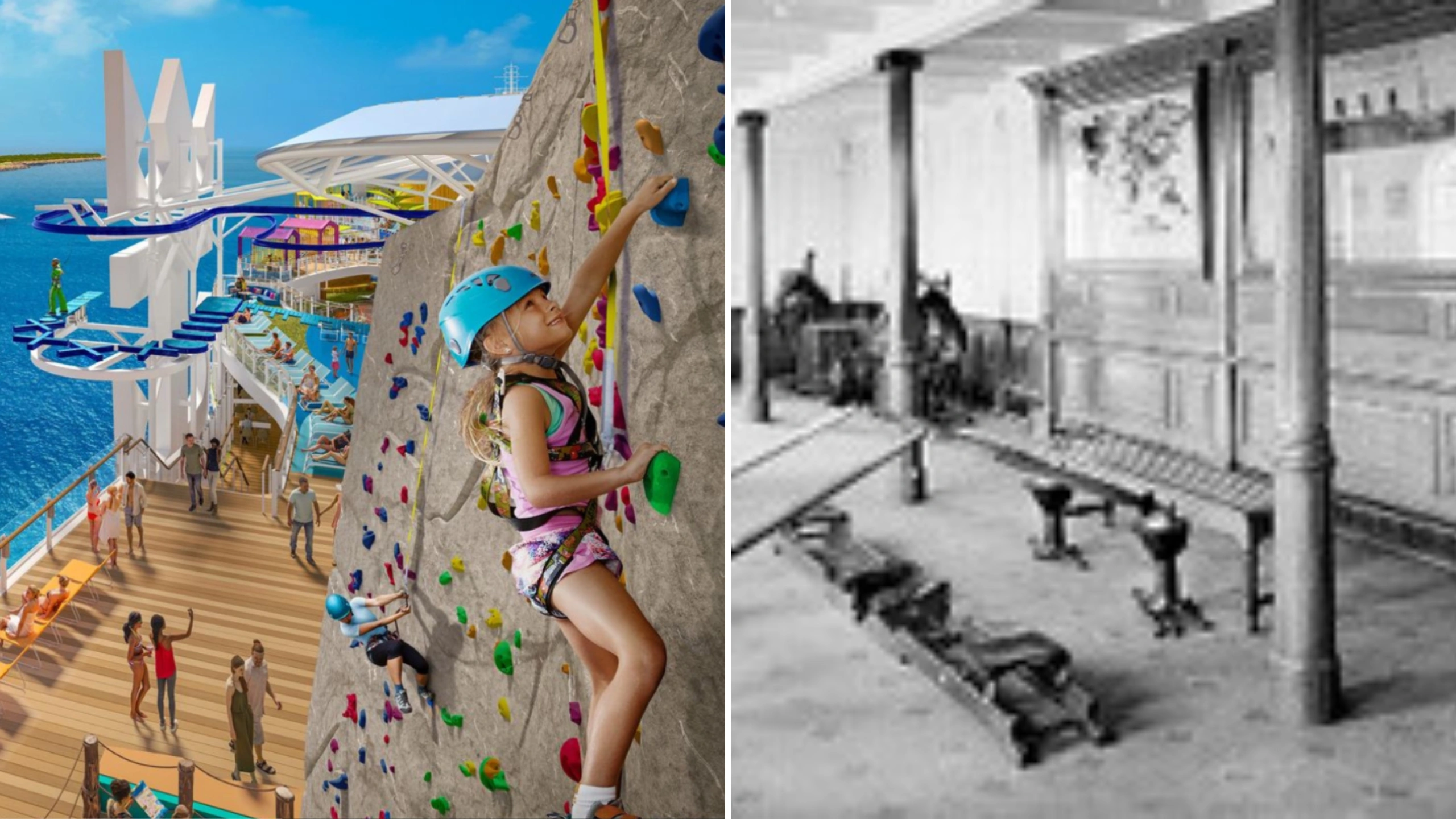
Icon of the Seas offers a much broader range of activities, from the thrilling AquaTheater to adrenaline-pumping challenges like rock climbing, laser tag, and a daring ropes course. It also incorporates traditional deck games such as shuffleboard and giant chess, bringing a nostalgic charm. The Icon blends modern entertainment with classic pastimes, offering a dynamic, next-level cruise experience.
The Titanic offered elegant and classic activities for its time, including squash courts, promenades for socializing, and traditional deck games like shuffleboard and quoits. These activities provided guests with leisure and entertainment, reflecting the refined atmosphere of the ship. While there was excitement aboard, it lacked the modern thrills found on today’s cruise ships.
Icon of the Seas and Titanic Swimming Pools Comparison
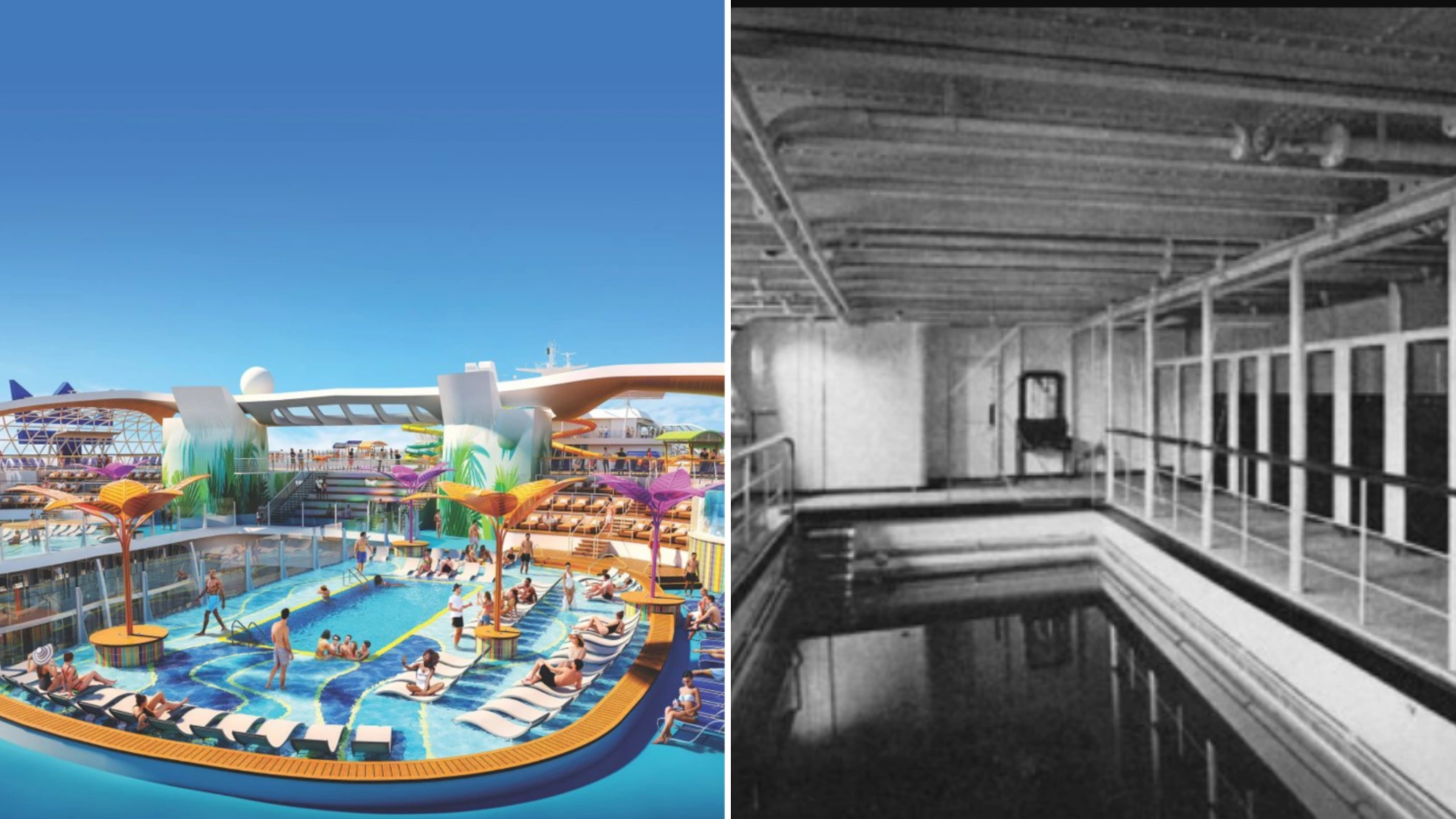
Icon of the Seas offers a modern take on cruising with multiple themed swimming pools, providing guests with a much broader and inclusive experience. These pools are designed for various preferences, featuring swim-up bars, relaxation areas, and dynamic poolside entertainment, ensuring that every guest can enjoy a luxurious, social experience at sea.
The Titanic featured a single pool, offering a more traditional and limited option for guests looking to enjoy some poolside relaxation. While elegant, the pool area was designed with the ship’s social structure in mind, where certain areas were restricted based on class, limiting accessibility for many passengers.
Icon of the Seas and Titanic Dining Comparison
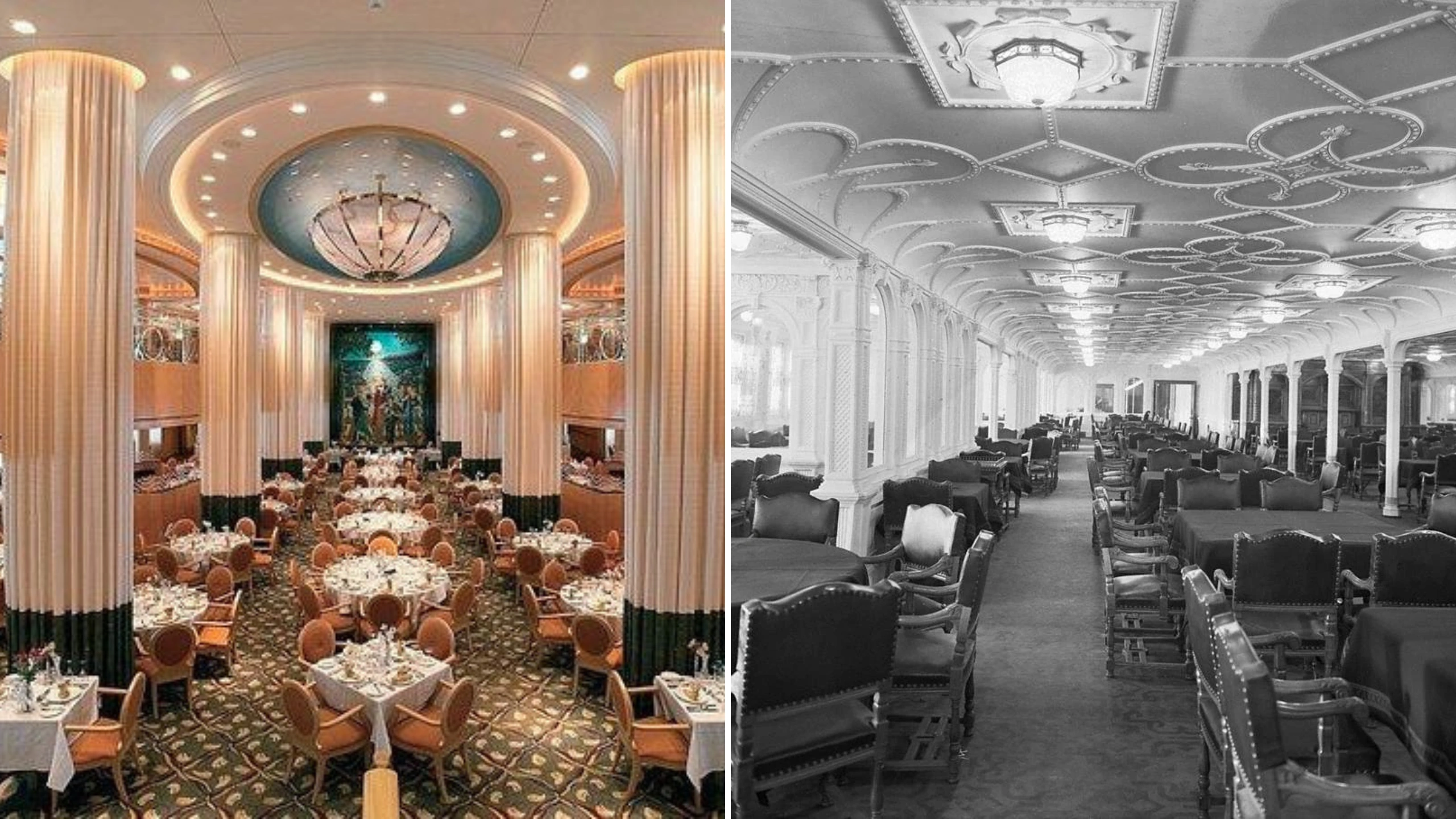
Icon of the Seas raises the standard for dining at sea, offering 15 distinct restaurants within the Royal Promenade. With a diverse range of global flavors and experiences, the Icon’s dining options reflect the modern cruise experience, where guests can enjoy a culinary journey with unprecedented choice and variety. Dining options include favorites like Giovanni’s Table, Windjammer Café, Chops Grille, and the exclusive Sabor Mexican Restaurant. This evolution in dining showcases the innovation and diversity that the new generation of cruise ships brings to travelers.
The Titanic offered a more traditional dining experience with just four venues available to guests. The First-Class Dining Room, The A La Carte Restaurant, The Second-Class Dining Room, and The Third-Class Dining Room. While these venues were elegant and carefully designed to cater to the different classes on board, the options were limited compared to modern cruise offerings. Meals were often set and more formal, providing a different experience focused on traditional luxury.
Icon of the Seas and Titanic Accommodation Comparison
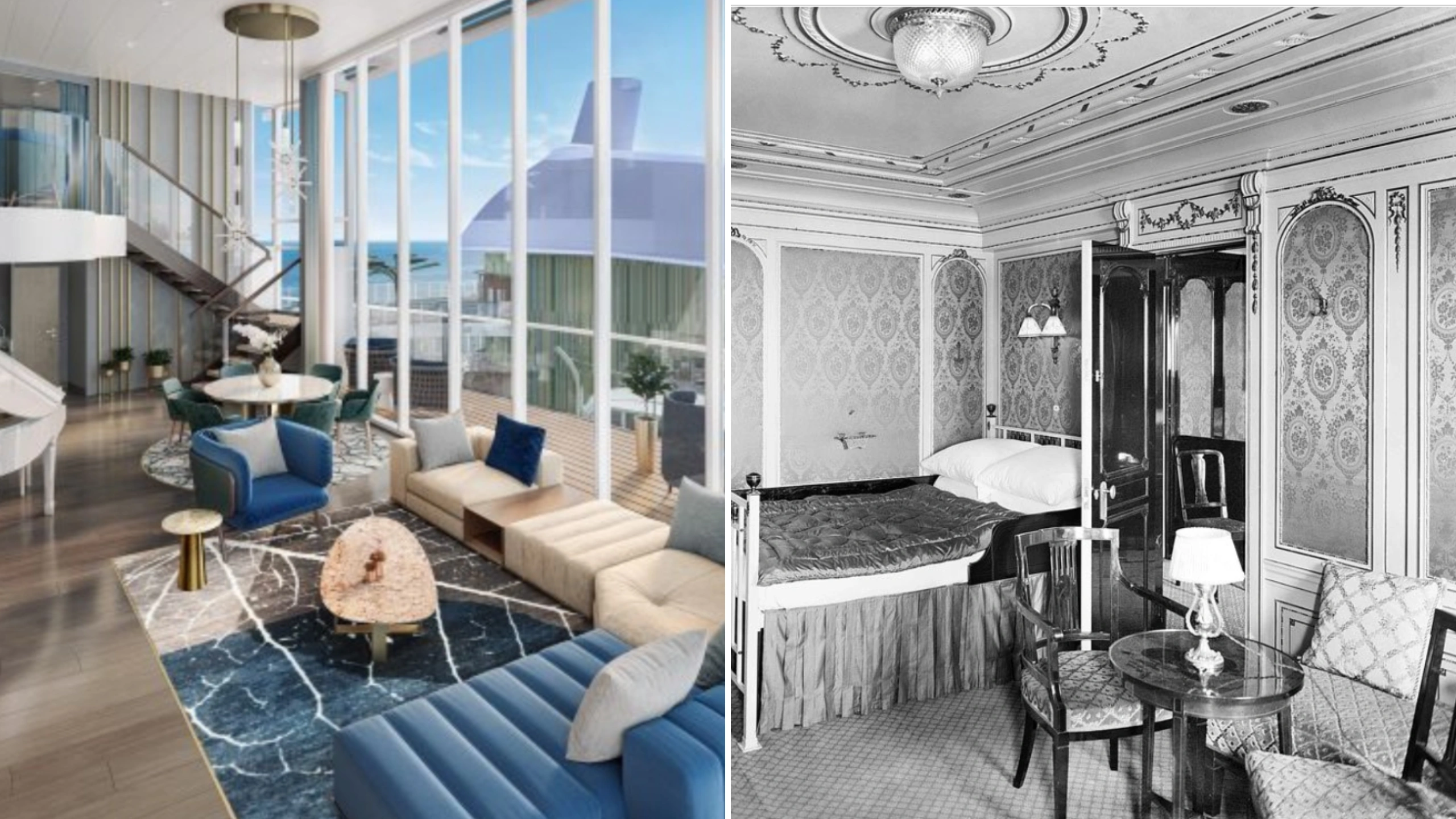
Icon of the Seas offers the Ultimate Family Townhouse, which incorporates modern features such as a fun slide between rooms and creative exterior elements. This accommodation is perfect for families seeking a unique, interactive experience at sea, showcasing the evolution of family-friendly luxury on cruise ships.
The Titanic offered Deluxe Parlour Suites, which reflected old-world grandeur with elegant furnishings and spacious layouts. These suites were designed to provide luxury, showcasing the timeless opulence of the early 20th century, with a focus on classic elegance and comfort at sea.
Icon of the Seas and Titanic Safety Comparison
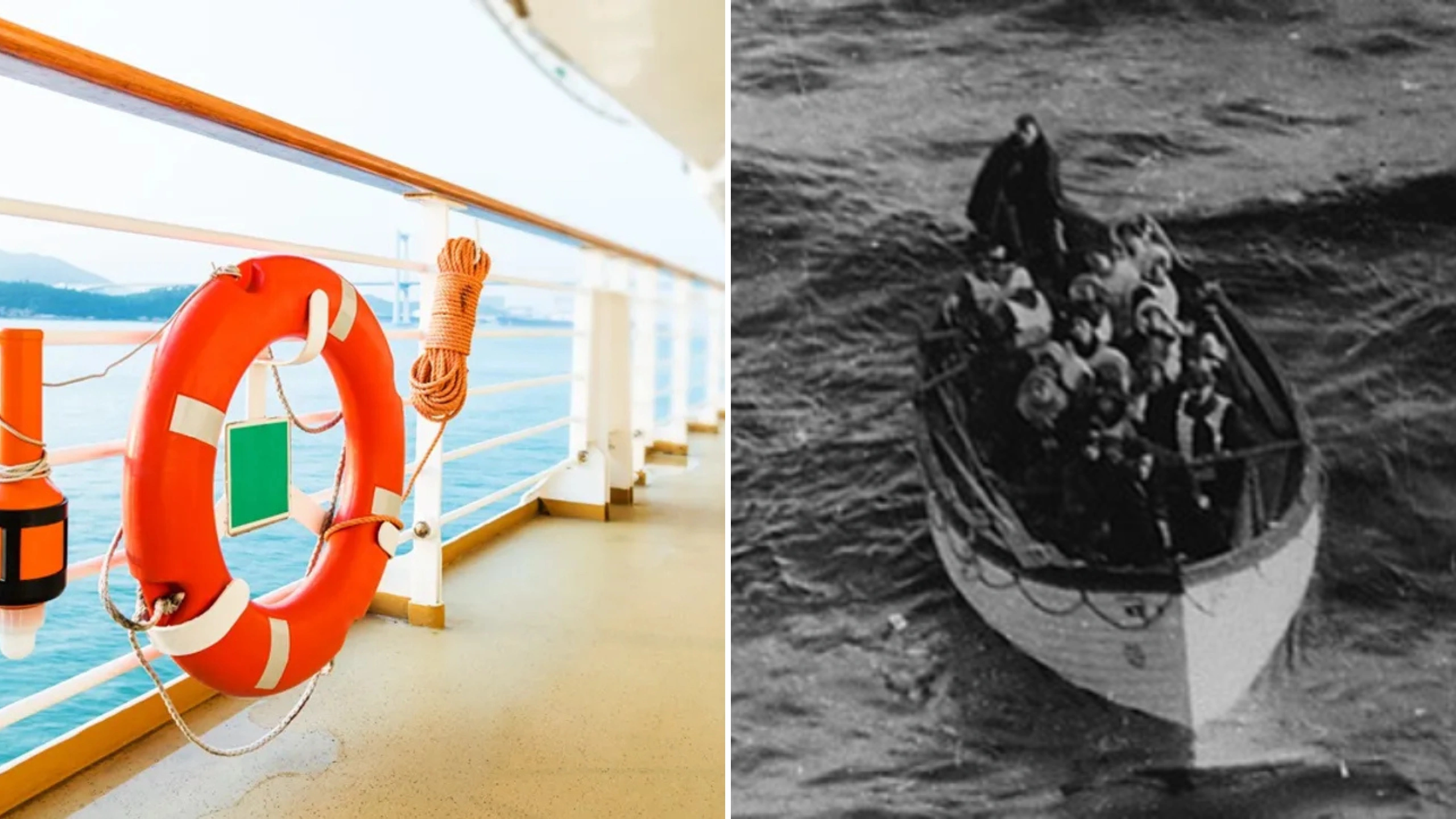
Icon of the Seas features major safety upgrades, including modern fire detection systems, automatic watertight doors, and enhanced communication tools. The ship is also equipped with sufficient lifeboats for all passengers and crew, along with improved navigation, engineering, and evacuation procedures. These innovations greatly reduce the risk of tragedy, ensuring higher survival rates and greater peace of mind for travelers. The comparison between the Titanic and modern cruise ships clearly highlights how far maritime safety and technology have progressed over time.
The Titanic carried around 2,240 passengers and crew, but with only 20 lifeboats, its tragic fate remains a stark reminder of the need for stronger safety protocols. Additionally, the Titanic lacked modern safety measures such as lifeboat drills, advanced communication systems, and enough life-saving equipment to ensure the survival of everyone onboard. Despite being a marvel of its time, the Titanic lacked the modern safety measures that are now essential on every cruise ship.
Icon of the Seas and Titanic Cost to Build Comparison
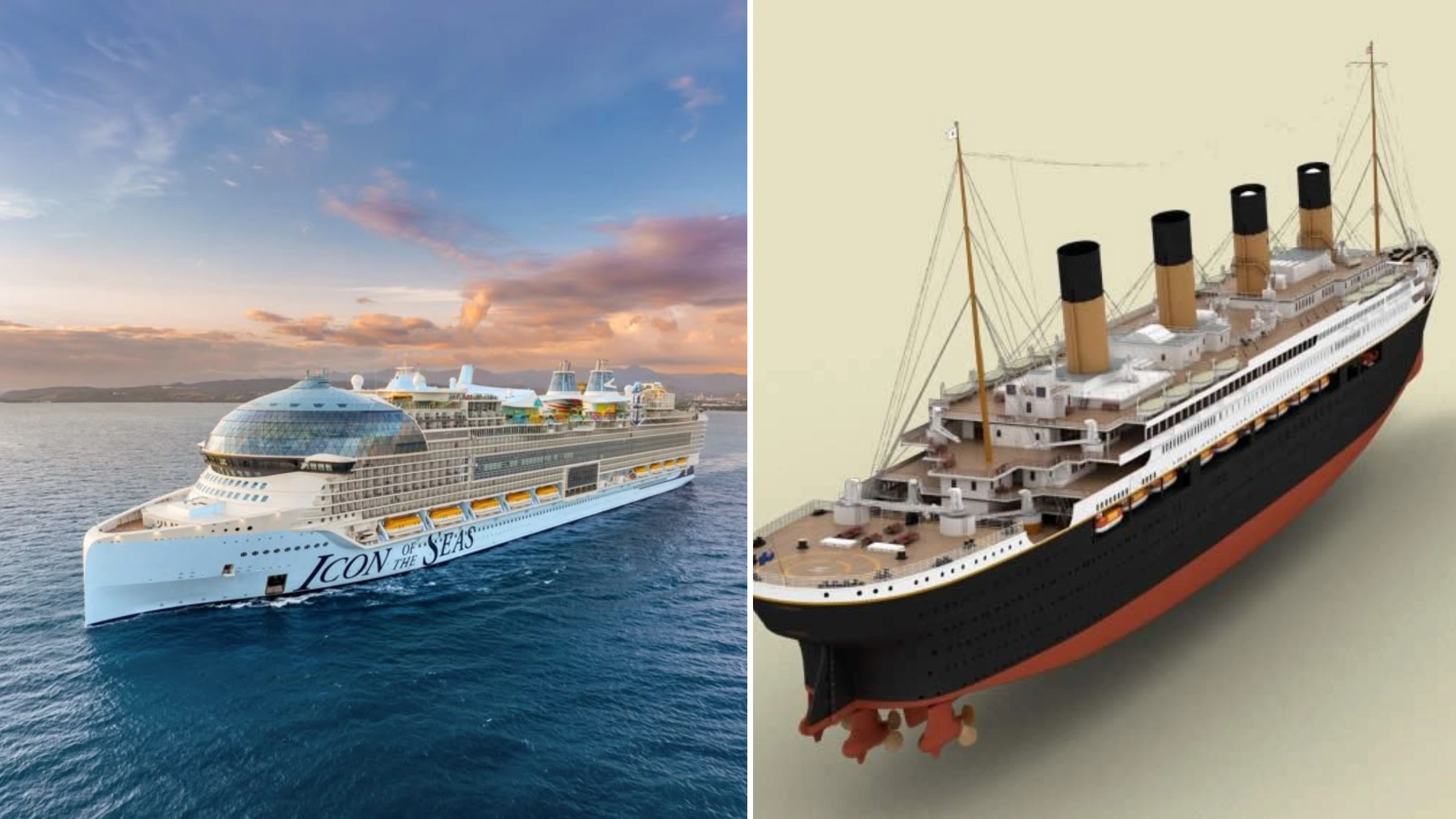
Icon of the Seas may cost up to $2 billion, a stark difference that reflects modern advancements in complexity, luxury, and smart efficiency. With cutting-edge technology, high-end designs, and advanced construction techniques, the cost reflects the pressures of modern construction and the demand for top-tier passenger experiences.
The Titanic was built for $7.5 million, which was a considerable amount for its time but reflects the simpler construction standards and luxury offerings of the early 20th century. While it was an engineering marvel back then, it lacked the modern amenities and advanced technology that are now standard on today’s ships.
Conclusion
The comparison between the The Icon of the Seas vs Titanic shows how far shipbuilding has advanced. The Titanic, once considered a marvel, tragically sank because safety measures were overlooked, showing us how important safety is.
“The Icon of the Seas sets the standard for modern luxury and safety, while the Titanic tragically highlighted the consequences of overlooked safety.”
In contrast, the Icon of the Seas represents the pinnacle of modern engineering with advanced technology and improved safety systems. This contrast underscores the lessons learned from history, which have shaped today’s high standards in maritime travel and passenger protection.
Frequently Asked Questions
Icon of the Seas vs Titanic: How do they compare in size and features?
Icon of the Seas is much larger than the Titanic, measuring 1,198 feet in length and a gross tonnage of 250,800, compared to the Titanic’s 882 feet and 46,328 tons. The Icon offers modern amenities, advanced safety systems, and more dining options, while the Titanic had fewer features and a single pool.
What Is the Passenger Capacity of Icon of the Seas?
The Icon of the Seas can accommodate up to 7,600 passengers, offering a spacious and luxurious cruising experience for thousands. In contrast, the Titanic was built to carry just 2,435 passengers, showing how modern cruise ships have dramatically expanded in size to serve far greater numbers of travelers.