
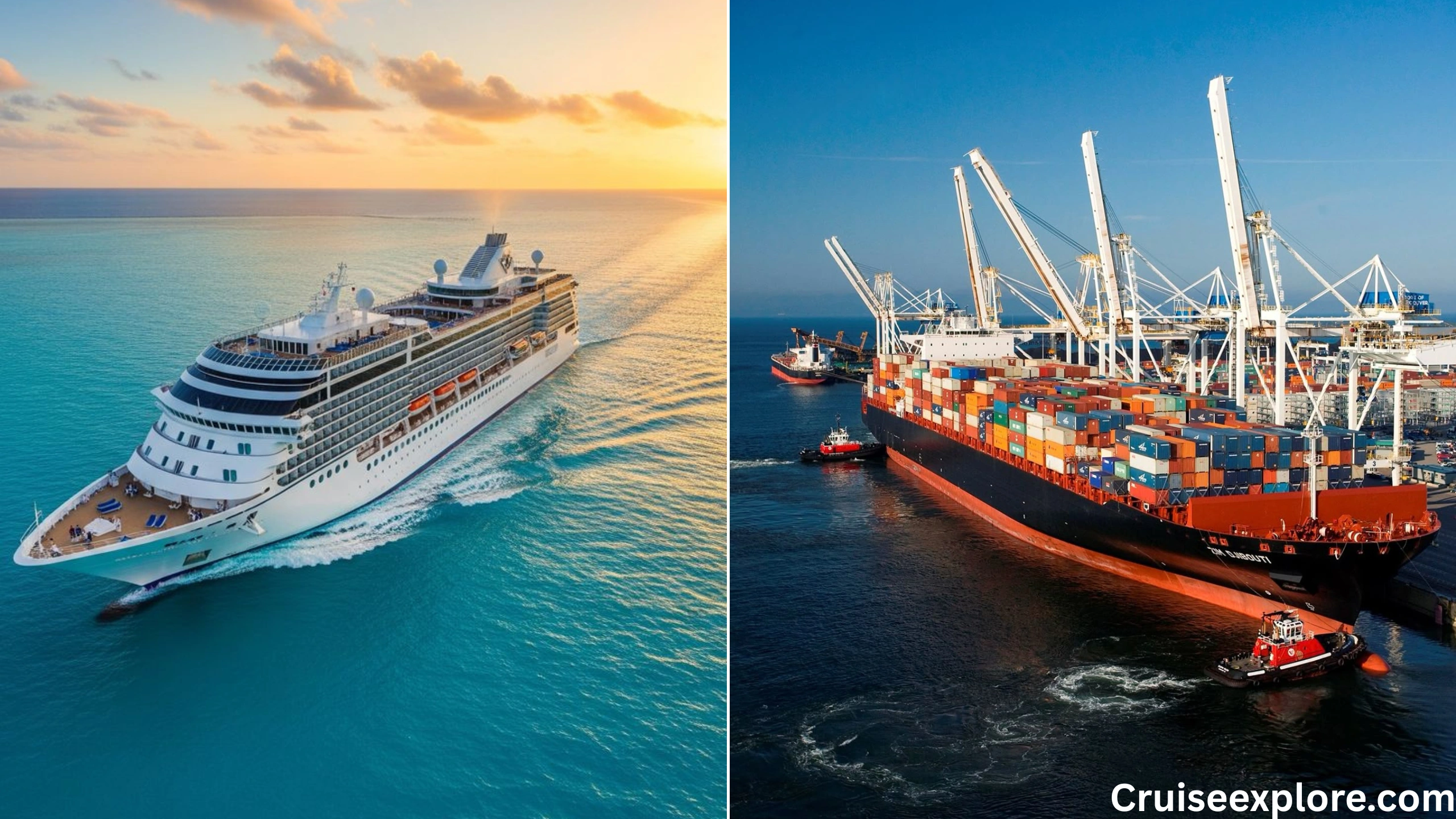
At first glance, cruise ships and cargo ships share a similar silhouette on the horizon. Both are large ocean-going vessels, both rely on skilled seafarers, and both operate under strict international maritime regulations. Beyond that surface similarity, however, the two ship types differ dramatically in purpose, onboard culture, crew structure, and day-to-day operations.
For anyone considering a career at sea, working in maritime recruitment, or simply curious about how the shipping industry functions, understanding these differences is essential. Crew roles on cruise ships are shaped by hospitality, passenger safety, and entertainment, while cargo ships focus on efficiency, navigation, and the safe transport of goods across global trade routes. This article explores how cruise ships and cargo ships compare, with a particular focus on crew roles, onboard operations, and what these differences mean for seafarers choosing between the two career paths.
Cruise Ships and Cargo Ships Explained
What is a cruise ship?
A cruise ship is essentially a floating resort. Its primary purpose is to carry passengers for leisure, offering accommodation, dining, entertainment, and curated shore experiences. Modern cruise ships can carry several thousand passengers and operate on fixed itineraries, calling at multiple ports over days or weeks.
Operationally, cruise ships balance maritime safety with hotel-style service. Everything from navigation and engineering to food service and guest entertainment must run smoothly to maintain passenger satisfaction. Cruise lines also invest heavily in branding and onboard experience, which directly influences how crew roles are structured.
Cruise ships also operate under international maritime regulations while meeting additional passenger safety and public health requirements. Industry bodies such as the Cruise Lines International Association (CLIA) play a key role in setting operational standards, crew training guidelines, and safety frameworks for passenger vessels worldwide. According to data published by CLIA, the cruise sector supports hundreds of thousands of seafaring jobs globally and continues to invest heavily in crew development and onboard safety systems.
If you want to explore how different cruise operators position themselves and structure their fleets, browsing an overview of major cruise lines can be helpful. Resources like Cruise Explore’s cruise lines directory provide useful context on the variety of operators in the global cruise market.
What is a cargo ship?
Cargo ships are built to transport goods such as containers, oil, grain, vehicles, and raw materials. Their design prioritises cargo capacity, fuel efficiency, and safety rather than passenger comfort. Schedules are dictated by logistics contracts, port availability, and supply chain demands.
Cargo shipping underpins global commerce. According to the International Maritime Organization, around 90 percent of world trade is carried by sea, highlighting the importance of cargo vessels to the global economy. Cargo ships typically operate with minimal crew and limited onboard amenities, focusing on reliability, compliance, and operational efficiency.
Crew Size and Structure on Cruise Ships vs Cargo Ships
One of the most striking differences between cruise ships and cargo ships is crew size.
A large cruise ship may carry anywhere from 1,000 to over 2,500 crew members, depending on vessel size and passenger capacity. This is because cruise ships function as both ships and hotels. In addition to deck and engine officers, they employ chefs, waitstaff, housekeeping teams, entertainers, youth counsellors, spa therapists, retail staff, and medical personnel.
Cargo ships operate with far leaner teams. A modern container ship or bulk carrier may sail with as few as 18 to 30 crew members. Each person often covers multiple responsibilities, and there is little redundancy in roles. Hierarchy is clear, and operations are tightly structured around watchkeeping, maintenance, and cargo handling.
This difference in crew size affects onboard culture. Cruise ships feel busy and social, with multicultural crews and constant passenger interaction. Cargo ships are quieter and more isolated, with crews forming close-knit working relationships over long periods at sea.
Key Crew Roles on Cruise Ships
Deck department
The deck department on a cruise ship includes the captain, chief officer, and deck officers responsible for navigation, safety, and compliance with maritime regulations. Unlike cargo ships, deck officers on cruise vessels also manage passenger-related safety procedures such as lifeboat drills and crowd control during emergencies.
Engine department
Engineers ensure propulsion, power generation, HVAC systems, and wastewater treatment all operate reliably. Cruise ship engine rooms are often larger and more complex than those on cargo ships due to the ship’s hotel load, including air conditioning, lighting, kitchens, and entertainment systems.
Hotel and hospitality staff
This is the largest crew segment on cruise ships. Roles include cabin stewards, waiters, bartenders, chefs, sommeliers, cleaners, and supervisors. These crew members directly shape the passenger experience and often work long hours aligned with guest schedules.
Entertainment and guest services
Cruise ships employ performers, activity coordinators, youth staff, and guest services officers. These roles do not exist on cargo ships and reflect the cruise industry’s focus on leisure and engagement.
Medical and support services
Doctors, nurses, security officers, and IT specialists are standard on cruise ships. With thousands of passengers onboard, cruise lines must be prepared to handle medical incidents, cybersecurity risks, and operational disruptions.
Key Crew Roles on Cargo Ships
Deck officers and ratings
The deck team handles navigation, mooring, cargo operations, and maintenance of the ship’s hull and equipment. On cargo vessels, deck officers are heavily involved in voyage planning, cargo stability calculations, and compliance with international shipping regulations.
Engine officers and ratings
Engineers on cargo ships maintain propulsion systems, generators, and auxiliary machinery. While cargo ship engine rooms may be less complex than those on cruise ships, the work is highly technical and often carried out with limited manpower.
Chief mate and bosun
The chief mate oversees cargo loading and unloading, safety procedures, and deck maintenance. The bosun leads the deck ratings and ensures tasks are completed efficiently. These roles are central to cargo operations and have no direct equivalent on cruise ships in terms of responsibility scope.
Catering and support staff
Cargo ships typically employ a cook and possibly a steward, responsible for meals and basic housekeeping. Unlike cruise ships, catering is functional rather than service-oriented, with no guest-facing element.
Which Is Better for Seafarers: Cruise Ships or Cargo Ships?
There is no universal answer; the better option depends on personal goals, lifestyle preferences, and career aspirations.
Advantages of working on cruise ships
Cruise ship careers appeal to those who enjoy social environments and customer interaction. Contracts are often shorter, ports are visited frequently, and there are opportunities to transition into shoreside hospitality roles. Crew also benefit from modern accommodation and facilities, especially on newer vessels. Exploring the world’s largest cruise ships highlights just how advanced onboard living and working environments have become.
However, cruise ship work can be physically demanding, with long hours and limited days off during contracts. Hierarchies are strict, and performance is closely monitored due to passenger feedback.
Advantages of working on cargo ships
Cargo ship careers suit seafarers who prefer technical roles, routine, and quieter onboard life. Contracts may be longer, but work schedules are more predictable, and there is less pressure from customer-facing responsibilities.
Cargo shipping also offers clearer long-term progression for officers and engineers within the commercial maritime sector. Many senior maritime professionals begin their careers on cargo vessels before moving into management, surveyor, or port operations roles ashore.
Career progression and lifestyle considerations
Cruise ships offer faster entry-level opportunities, particularly for those without maritime academy training, especially in hospitality roles. Cargo ships usually require formal maritime qualifications but provide a more traditional seafaring career path. The choice ultimately depends on whether a seafarer values social interaction and variety or technical mastery and operational focus.
Conclusion
Cruise ships and cargo ships represent two distinct worlds within the maritime industry. Cruise vessels are built around people, experiences, and service, requiring large, diverse crews and a hospitality-driven mindset. Cargo ships are built around efficiency, trade, and technical expertise, operating with small crews and a sharp focus on operational excellence.
For seafarers, understanding these differences is crucial when choosing a career path. Cruise ships may suit those seeking travel, interaction, and shorter contracts, while cargo ships appeal to individuals looking for technical roles, long-term progression, and quieter life at sea. Both play vital roles in the global maritime ecosystem, and both offer rewarding careers for those aligned with their unique demands.
Frequently Asked Questions
What is the main difference between cruise ships and cargo ships?
The main difference lies in purpose. Cruise ships transport passengers for leisure and focus on hospitality, entertainment, and guest experience. Cargo ships transport goods and prioritise efficiency, safety, and logistics over comfort and service.
Do cruise ships have more crew than cargo ships?
Yes. Cruise ships carry significantly more crew due to the need for hospitality, entertainment, medical services, and passenger support. A large cruise ship may have over 2,000 crew members, while a cargo ship typically operates with fewer than 30.
Are crew roles on cruise ships different from cargo ships?
They are very different. Cruise ships employ a wide range of hotel, entertainment, and guest service roles that do not exist on cargo ships. Cargo ship roles are more technical and operational, focusing on navigation, engineering, and cargo handling rather than customer service.